
Urological cancer: bladder, kidney and prostate
Urological oncology deals with tumours of the bladder, kidney and prostate. Time matters with these conditions, and most of the outlook depends on finding them early and investigating them properly.
On this page:
Bladder tumours
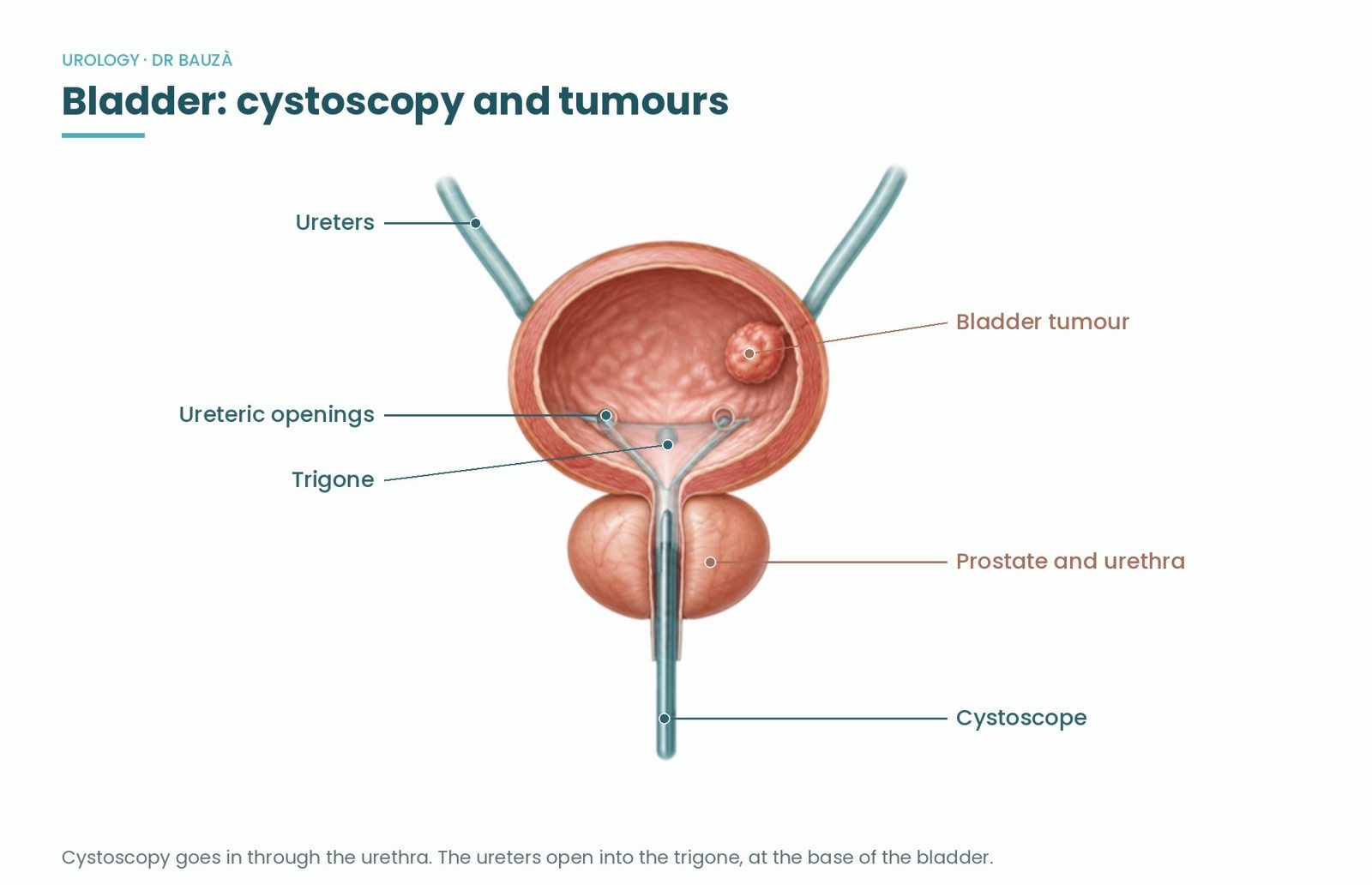
The most common sign is blood in the urine, which often appears just once and without any pain. That is exactly why it gets played down: it does not hurt and it does not come back, so people let it go.
The key test is cystoscopy, which looks inside the bladder through the urethra. If there is a tumour, a transurethral resection of bladder tumour (TURBT) removes it and, at the same time, provides tissue for analysis. That analysis shows the type of tumour and how deep it goes, and the follow-up plan is based on it.
Kidney tumours
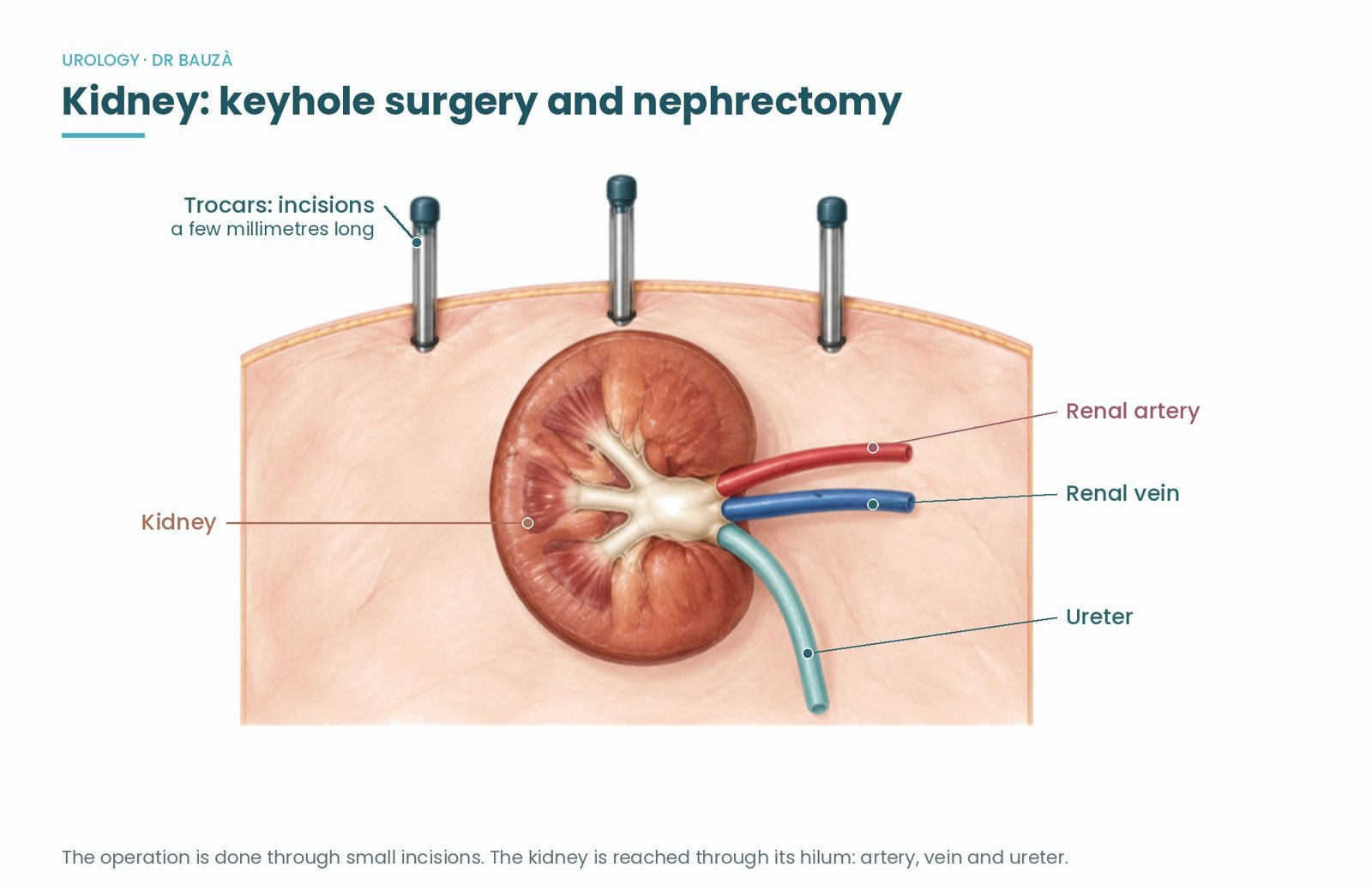
Many kidney tumours are found by chance, on an ultrasound or CT scan done for some other reason. That is also good news: they are found before they cause symptoms, which is when there are the most options.
When the size and position of the tumour allow it, the preferred option is a partial nephrectomy: removing the tumour and keeping the kidney. If that is not possible, a radical nephrectomy (removing the whole kidney) is considered. Both are done by laparoscopic (keyhole) surgery, with small incisions, less pain and a quicker recovery than open surgery.
Prostate: PSA and diagnosis
A raised PSA does not mean you have cancer. It goes up for many non-cancerous reasons: the prostate simply getting bigger, an infection or prostatitis, a recent catheter, or even hard exercise in the days before the test.
The sensible thing is neither to panic nor to ignore it, but to take it step by step: confirm the result, look at it alongside the examination and how it changes over time and, when appropriate, have an MRI scan before a biopsy is considered. That step avoids unnecessary biopsies and helps target the ones that are needed.
What to do next depends on the result and on the person: not every case needs the same treatment, and some do not even need treatment straight away.
Warning signs not to ignore
- Blood in the urine, even if it happens only once and does not hurt.
- A raised PSA, or one that keeps rising over successive blood tests.
- Something found on an ultrasound or CT scan done for another reason.
- Persistent pain in your back or side, unexplained weight loss or marked tiredness.
None of these signs on its own means there is a tumour. They mean it is worth looking into.
Where I see patients
Clinics in Palma (Quirónsalud Palmaplanas) and Manacor (Més Consultes Mèdiques). Surgery takes place at Palmaplanas. You can call in English.
Appointments: +34 971 918 000 (Palma) · +34 971 559 000 (Manacor) · See addresses
Dr José Luis Bauzá Quetglas. Urologist. Registered with the Balearic Medical Association (COMIB), no. 070709805. Fellow of the European Board of Urology (FEBU). PhD in Medicine, University of the Balearic Islands (UIB).
This page is for information only and does not replace a medical consultation. Each case has to be assessed individually.